Fixed Price vs. Time and Materials: Which Protects You
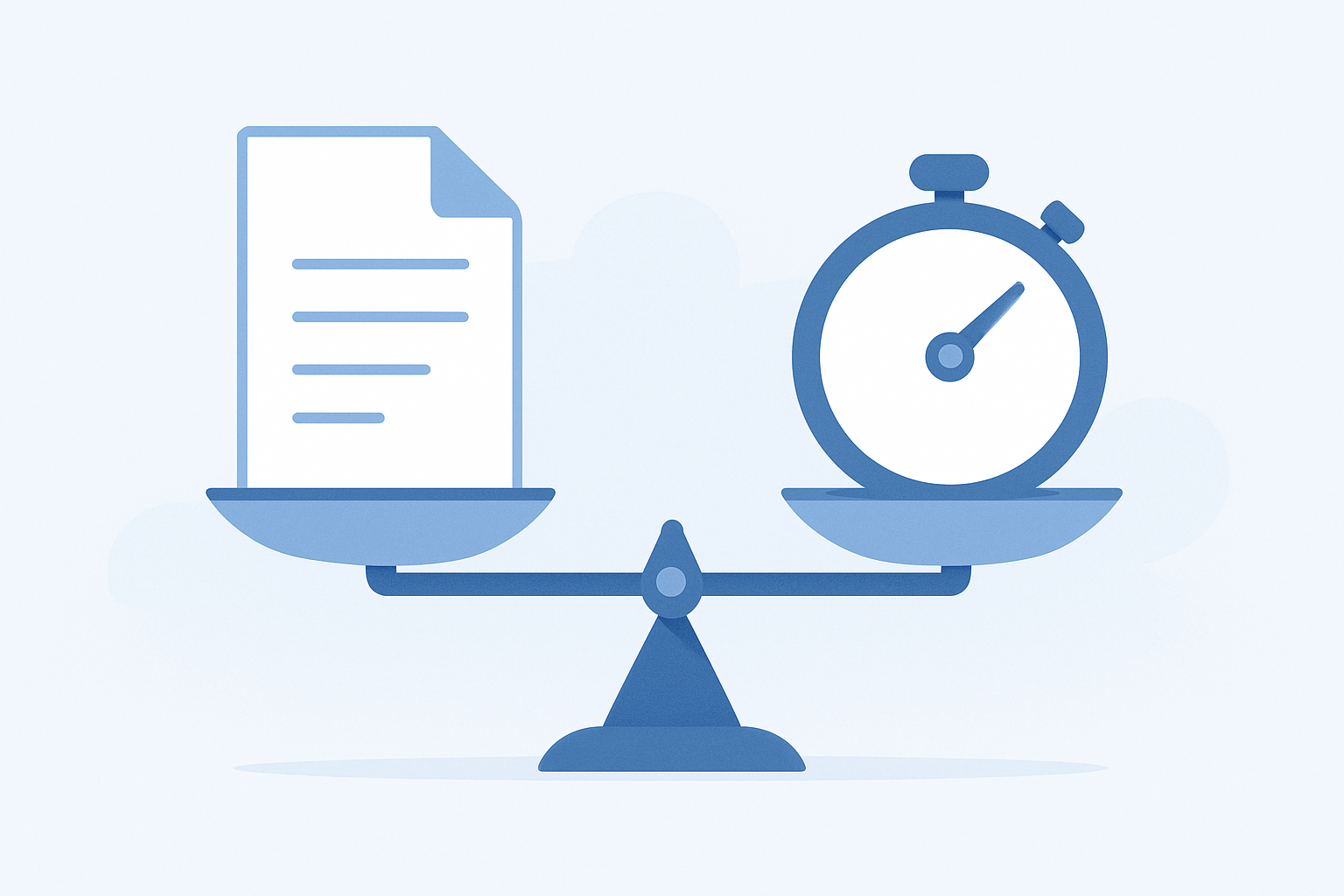
Fixed Price vs. Time and Materials: Which Contract Model Actually Protects You
When you hire a custom software development company, one of the first decisions you will face has nothing to do with technology. It has to do with money, risk, and trust. Before a single line of code is written, you will need to agree on a contract model, and the one you choose will shape the entire project experience.
The two most common models are fixed price and time and materials (T&M). Both have legitimate uses, and neither is universally better. What matters is understanding how each one works, where each one can hurt you, and which fits the reality of your specific project.
This guide breaks it down in plain language so you can walk into any vendor conversation with confidence.
What Is a Fixed Price Contract?
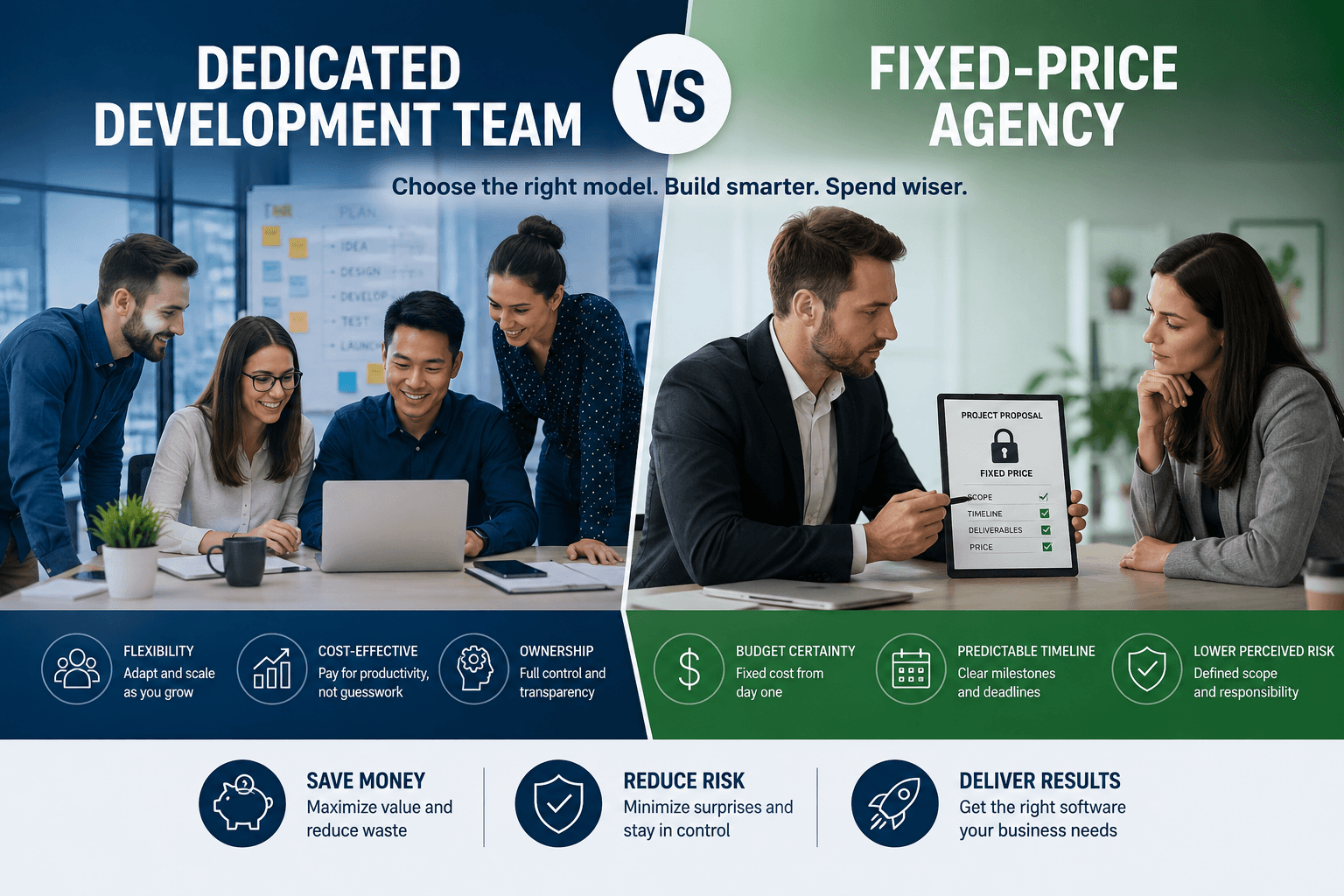
A fixed price contract is exactly what it sounds like. You and the development team agree on a defined scope of work, a set deadline, and a locked budget before the project begins. The vendor delivers what was agreed upon for the price that was agreed upon, regardless of how many hours it actually takes them.
On the surface, this sounds like the safest option for a business owner. You know what you are spending before you start. There are no surprise invoices at the end of the month.
When Fixed Price Works Well
Your requirements are fully defined and unlikely to change
The project is relatively small or has clear, measurable deliverables
You are working with a vendor for the first time and want cost certainty
You are building something like a simple landing page, a data migration tool, or a straightforward integration
The Hidden Risk of Fixed Price
Here is the part most vendors do not explain clearly upfront. When a development company accepts a fixed price contract, they are taking on financial risk. To protect themselves, they do two things: they pad the estimate to cover unknowns, and they write a very tight scope document.
If your needs evolve during the project, which they almost always do in software development, every change becomes a change order. Change orders cost extra and slow things down. What felt like budget certainty at the start can quickly become a frustrating negotiation at every turn.
Fixed price works when scope is crystal clear. It breaks down when the product is complex, when user feedback shapes the build, or when you are exploring new territory.
What Is a Time and Materials Contract?
A time and materials contract bills you for the actual hours worked and the resources used. The team tracks their time, and you pay for what gets built. There is usually an agreed-upon hourly rate or team rate, and sometimes a project ceiling to keep costs from running away.
This model is more flexible by design. You are not locked into a rigid scope. If you discover a better approach halfway through, you can pivot without a change order battle.
When Time and Materials Works Well
Your requirements are likely to evolve based on user testing or market feedback
You are building a complex product like a SaaS platform, mobile app, or AI-powered system
You want an ongoing development relationship rather than a one-time project
You trust the vendor and want to collaborate closely during the build
The Risk You Need to Manage
The obvious concern with T&M is cost unpredictability. Without discipline, a project can expand well beyond your original budget. This is sometimes called scope creep, and it is a real problem.
The way to protect yourself in a T&M engagement is to require regular reporting, set milestone checkpoints, and establish a clear budget ceiling with a defined approval process before costs can exceed it. A good development partner will build these guardrails into the process with you.
Side-by-Side Comparison
Factor | Fixed Price | Time and Materials |
|---|---|---|
Budget certainty | High at the start | Flexible, requires monitoring |
Flexibility during the build | Low | High |
Best for | Well-defined projects | Evolving or complex projects |
Risk of scope battles | High | Low |
Risk of cost overruns | Low (for client) | Moderate without guardrails |
Vendor transparency | Lower incentive | Higher incentive |
The Question Nobody Asks: Who Bears the Risk?
Every contract model is really a negotiation over who carries the risk. In a fixed price deal, the vendor carries the financial risk of underestimating, so they charge more and protect themselves with strict scope language. In a T&M deal, you carry more budget risk, but you gain flexibility and transparency.
Neither model eliminates risk. They just move it around.
The smartest approach is to match the contract model to the level of certainty you actually have. If you have a fully detailed specification document and the scope will not change, fixed price is reasonable. If you are building something innovative, iterative, or complex, time and materials will almost certainly serve you better, as long as you have a partner who communicates clearly and manages the budget responsibly.
Hybrid Models and What to Watch For
Many experienced development firms offer hybrid approaches that combine elements of both models. For example, a team might charge a fixed price for a discovery and planning phase, then shift to T&M for the actual development. This gives you cost certainty during scoping and flexibility during building.
Other hybrids include:
Capped T&M: Time and materials with a maximum budget ceiling
Sprint-based pricing: Fixed price per development sprint with flexible scope across sprints
Retainer models: A set monthly fee for a defined number of hours, useful for ongoing product development
If a vendor only offers one model with no flexibility, that is worth noting. A mature development team should be able to advise you on what fits your situation rather than defaulting to whatever is easiest for them.
How to Protect Yourself Regardless of the Model
The contract type matters, but the quality of your partnership matters more. Here are practices that protect you in any arrangement:
Get a detailed scope document before signing anything, even in a T&M deal
Require weekly or biweekly progress reports so you always know where the budget stands
Define acceptance criteria for each deliverable so there is no ambiguity about what done means
Ask about change management processes before the project starts
Request references from past clients who had similar project types
Understand who owns the code when the project ends
These are not unreasonable requests. Any professional development company should welcome them.
Making the Right Choice for Your Project
If you are a startup founder building your first product, a T&M or hybrid model usually makes the most sense. Your requirements will evolve as you learn from users, and a fixed price contract will punish you every time you want to improve something.
If you are a business owner adding a specific tool to an existing system, and you can define exactly what you need, a fixed price engagement can work well and give you the budget clarity you need to plan.
The bottom line is this: do not choose a contract model based on what sounds safest in the abstract. Choose based on how well-defined your project is, how much you trust the vendor, and how much flexibility you expect to need.
At NextGen Software, based in Boca Raton, FL, we work with startups and growing businesses to build web apps, mobile apps, SaaS platforms, and AI-powered solutions. We are transparent about contract models and will always recommend the approach that actually fits your project, not the one that is easiest for us. If you are trying to figure out the right structure for your next software investment, we would be glad to talk it through with you. Schedule a free discovery call at nextgensoftware.us and let's build something that works.