How to Scale Your Web App Without a Full Rewrite

How to Scale Your Web App Without a Full Rewrite
Your web app is growing. User numbers are climbing, transactions are increasing, and the feedback from your team is starting to sound familiar: the system is slow, features are hard to add, and something crashes every other Tuesday. The instinct for many founders is to assume the only fix is a complete rebuild from scratch.
That instinct is usually wrong, and it is almost always expensive.
A full rewrite can take 12 to 24 months, cost hundreds of thousands of dollars, and introduce a whole new set of bugs while your existing customers grow frustrated. The good news is that most scaling problems can be solved incrementally, strategically, and without throwing away everything you have already built.
This guide walks you through the most effective approaches to scaling a web app the smart way.
Start With a Performance Audit, Not Assumptions
Before making any technical changes, you need data. Many founders assume their database is the bottleneck, only to discover the real problem is unoptimized front-end rendering or a third-party API that responds slowly.
A solid performance audit looks at:
Server response times across different endpoints
Database query performance, including slow queries and missing indexes
Front-end load times and how assets like images and scripts are being delivered
Infrastructure utilization, such as CPU and memory usage under peak load
Error logs that reveal recurring failures
Tools like Google Lighthouse, New Relic, Datadog, and AWS CloudWatch can give you a clear picture of where your app is actually struggling. Once you have real data, you can prioritize fixes with confidence instead of guessing.
Optimize Your Database Before Adding More Servers
The database is the most common performance bottleneck in growing web apps, and it is often the most fixable without major rework.
Add Indexes to Frequently Queried Columns
This is one of the highest-impact, lowest-effort changes you can make. If your app is running full table scans on large datasets, adding the right indexes can reduce query times from seconds to milliseconds.
Implement Caching
Caching stores the results of expensive operations so your app does not have to repeat them constantly. Tools like Redis and Memcached are widely used for this purpose. Caching is especially powerful for data that is read frequently but does not change often, such as product catalogs, user dashboards, or configuration settings.
Consider Read Replicas
If your app is read-heavy, meaning users are pulling data far more than they are writing it, you can offload read traffic to a database replica. This reduces the load on your primary database without requiring you to change your core application logic.
Scale Infrastructure Horizontally, Not Just Vertically
Many early-stage apps run on a single server. When traffic spikes, the usual response is to upgrade that server to a bigger one. This is called vertical scaling, and it works up to a point. The problem is that one server has a ceiling, and it also represents a single point of failure.
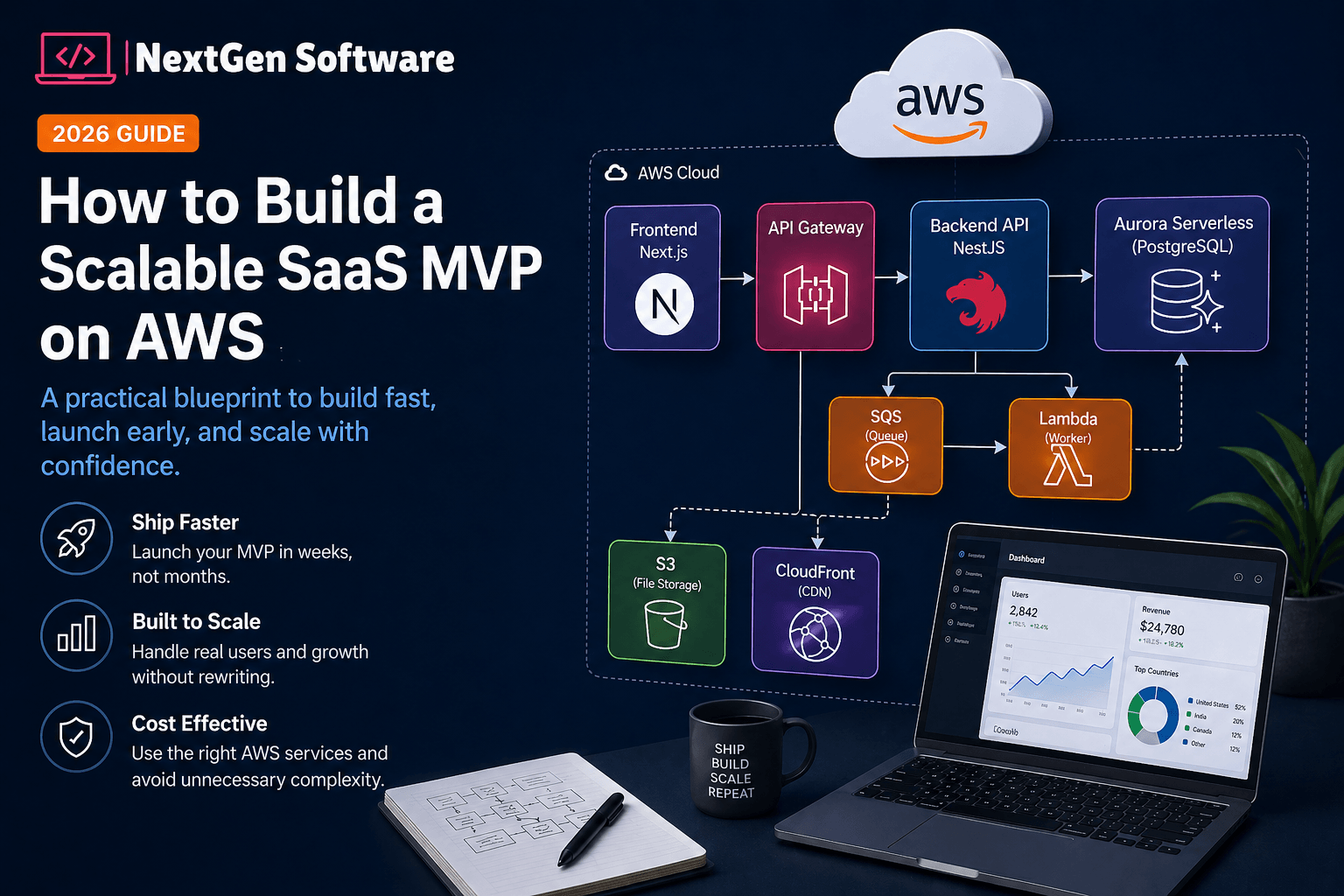
Horizontal scaling means adding more servers and distributing the load between them using a load balancer. Cloud platforms like AWS, Google Cloud, and Azure make this relatively straightforward with auto-scaling groups that spin up new instances when traffic increases and shut them down when it drops.
This approach lets your app handle 10x the users without rewriting a single line of application code.
Introduce a CDN for Static Assets
A Content Delivery Network (CDN) like Cloudflare or AWS CloudFront caches your static files (images, CSS, JavaScript) on servers located close to your users around the world. This dramatically reduces load times, especially for users who are geographically far from your primary server.
Decouple Features Into Services Gradually
You may have heard the term microservices and wondered whether it applies to your situation. It might, but you do not need to jump to a full microservices architecture overnight.
A more practical approach is the strangler fig pattern, where you identify specific features or modules within your existing app and gradually extract them into independent services over time. For example:
Move your email notification system into a separate service
Isolate your payment processing logic from your core app
Extract your reporting and analytics module so it does not compete for resources with user-facing features
Each of these extractions makes your system more resilient and easier to scale independently. You are not rewriting the app, you are refactoring it thoughtfully, piece by piece.
Improve Code Quality Without Starting Over
Legacy code that is difficult to maintain does not always require a full rewrite. Targeted refactoring can dramatically improve the situation.
Here is what a pragmatic refactoring strategy looks like:
Identify the areas of the codebase that change most often and focus improvement efforts there first
Write tests before refactoring so you can verify that behavior does not change during the process
Replace outdated dependencies with modern, well-maintained alternatives
Document critical logic so your team is not reverse-engineering the same code repeatedly
Refactoring is not glamorous work, but it pays compounding dividends. Every hour spent cleaning up a messy module saves multiple hours of debugging and feature development later.
Know When a Partial Rebuild Actually Makes Sense
Sometimes a component of your app truly is beyond repair. A specific module may have been built on a framework that is no longer supported, or a core piece of logic may be so deeply flawed that maintaining it costs more than replacing it.
In these cases, a targeted rebuild of just that component is a reasonable and cost-effective decision. This is fundamentally different from rewriting the entire application. You are surgically replacing one part of the system while keeping everything else intact and functional.
The key questions to ask before any rebuild are:
What specific problem does this solve?
What is the cost of NOT doing it over the next 12 months?
Can the same outcome be achieved through optimization or refactoring?
If you answer those questions honestly and a rebuild still makes sense, then it is the right call.
Build a Scaling Roadmap, Not a One-Time Fix
Scaling is not a destination, it is an ongoing practice. The businesses that scale successfully are the ones that treat performance and architecture as continuous priorities rather than emergency fixes.
That means:
Scheduling regular performance reviews
Building monitoring and alerting into your infrastructure from the start
Making architectural decisions with future scale in mind, even when the immediate need is small
Working with developers who understand both the technical and business dimensions of scaling
If your web app is showing signs of strain and you are not sure whether to optimize, refactor, or rebuild, you do not have to figure it out alone. The team at NextGen Software, based in Boca Raton, FL, specializes in helping startups and growing businesses make smart, cost-effective decisions about their software. Whether you need a thorough technical audit, targeted performance improvements, or a phased modernization plan, we bring the expertise to guide you through it. Visit nextgensoftware.us to schedule a free discovery call and find out exactly what your app needs to grow.