How to Write a Software Development RFP (Free Template)
What Is a Software Development RFP and Why Does It Matter?
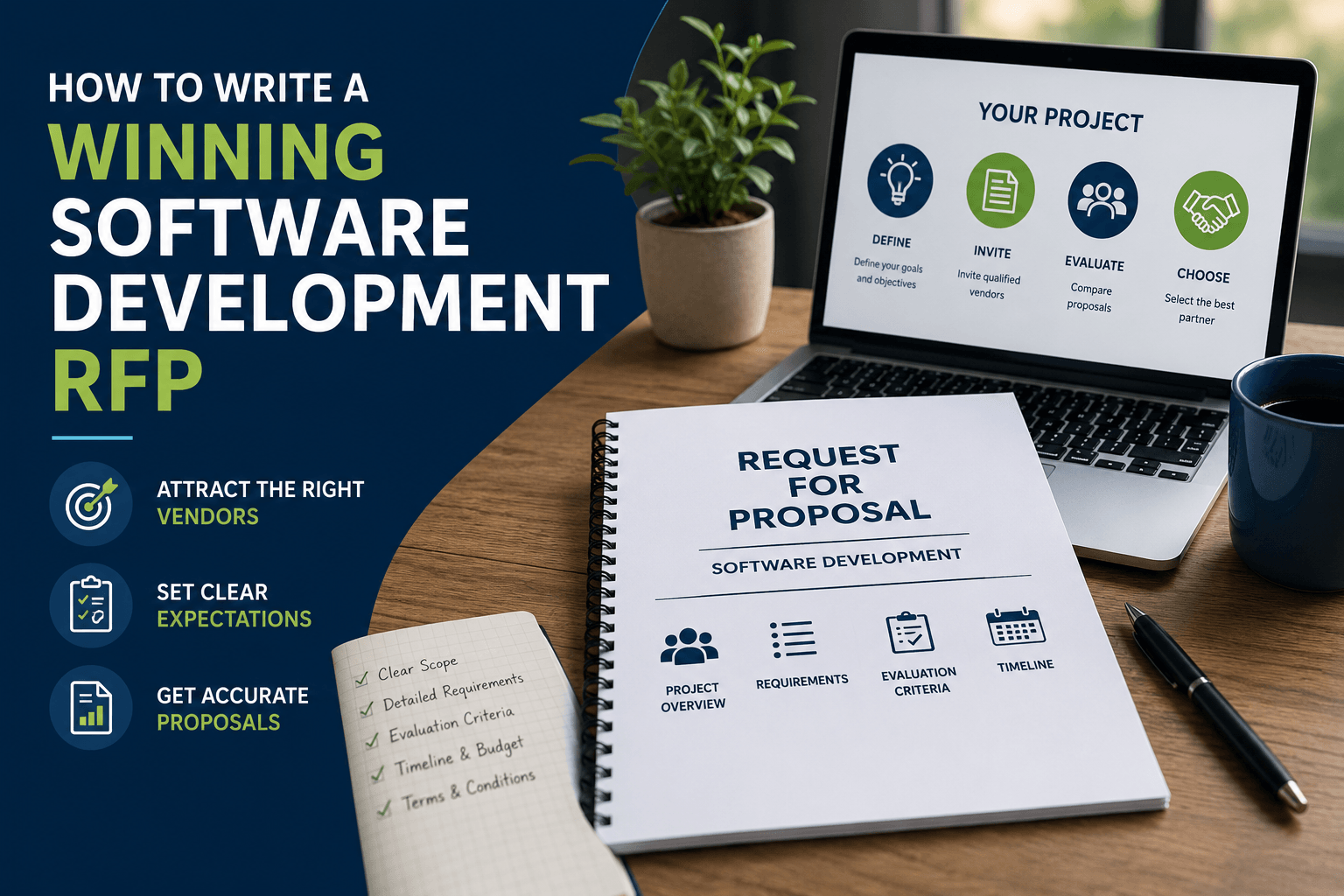
A Request for Proposal (RFP) is a formal document that outlines your project requirements, goals, and evaluation criteria so that software development vendors can submit accurate, comparable proposals. Without a clear RFP, you risk receiving wildly different bids, misaligned expectations, and vendors who do not fully understand what you need.
For business owners and startup founders, a well-written RFP is one of the most important steps in the custom software development process. It protects your budget, saves time during vendor evaluation, and dramatically improves your chances of a successful project.
In this guide, we will walk you through exactly how to write a software development RFP, section by section, and provide a free template you can start using today.
Use the fillable, print-ready template at nextgensoftware.us/rfp-template. Open it, fill in your project details, and save it as a PDF to send to vendors.
The Key Sections of a Software Development RFP
1. Company Overview
Start by giving vendors context about who you are. Include:
Your company name, industry, and location
A brief description of your business model
The size of your team and any relevant technical infrastructure already in place
Your target market or end users
This helps vendors tailor their proposals to your specific business environment rather than submitting a generic response.
2. Project Summary
Write a clear, concise summary of the software you want built. This section should answer:
What problem does this software solve?
Who will use it (internal staff, customers, or both)?
Is this a new build or an enhancement of an existing system?
What is the general scope (web app, mobile app, API integration, SaaS platform, etc.)?
Keep this section high-level. You will get into specifics in the requirements section below.
3. Goals and Success Metrics
Define what a successful outcome looks like. Vendors want to understand your definition of "done" before they price the project. Good examples include:
Reduce manual data entry by 80 percent within the first quarter post-launch
Support 10,000 concurrent users without performance degradation
Integrate with Salesforce and QuickBooks on day one
Launch a beta version within 90 days
When vendors understand your goals, they can propose a solution that actually meets them instead of just fulfilling a feature checklist.
4. Functional and Technical Requirements
This is the most detailed section of your software development RFP. Break it into two parts:
Functional Requirements (what the software must do):
User authentication and role-based access control
Dashboard with real-time reporting
Payment processing integration
Automated email notifications
Multi-language or multi-currency support if applicable
Technical Requirements (how it should be built):
Preferred technology stack (or openness to vendor recommendations)
Hosting environment (cloud, on-premise, hybrid)
Security and compliance standards such as HIPAA, SOC 2, or PCI-DSS
Required third-party integrations
Performance benchmarks and uptime expectations
If you are not technical, that is perfectly fine. Simply describe what the software should do in plain language, and ask vendors to recommend the best technical approach.
5. Project Timeline
Provide your ideal timeline, including:
The date you need the RFP responses submitted by
Your target project start date
Key milestones or hard deadlines (product launch, trade show, fiscal year end)
Whether you prefer a phased rollout or a single full release
Be realistic here. Artificially tight deadlines can discourage quality vendors from responding or push them to cut corners in their proposal.
6. Budget Range
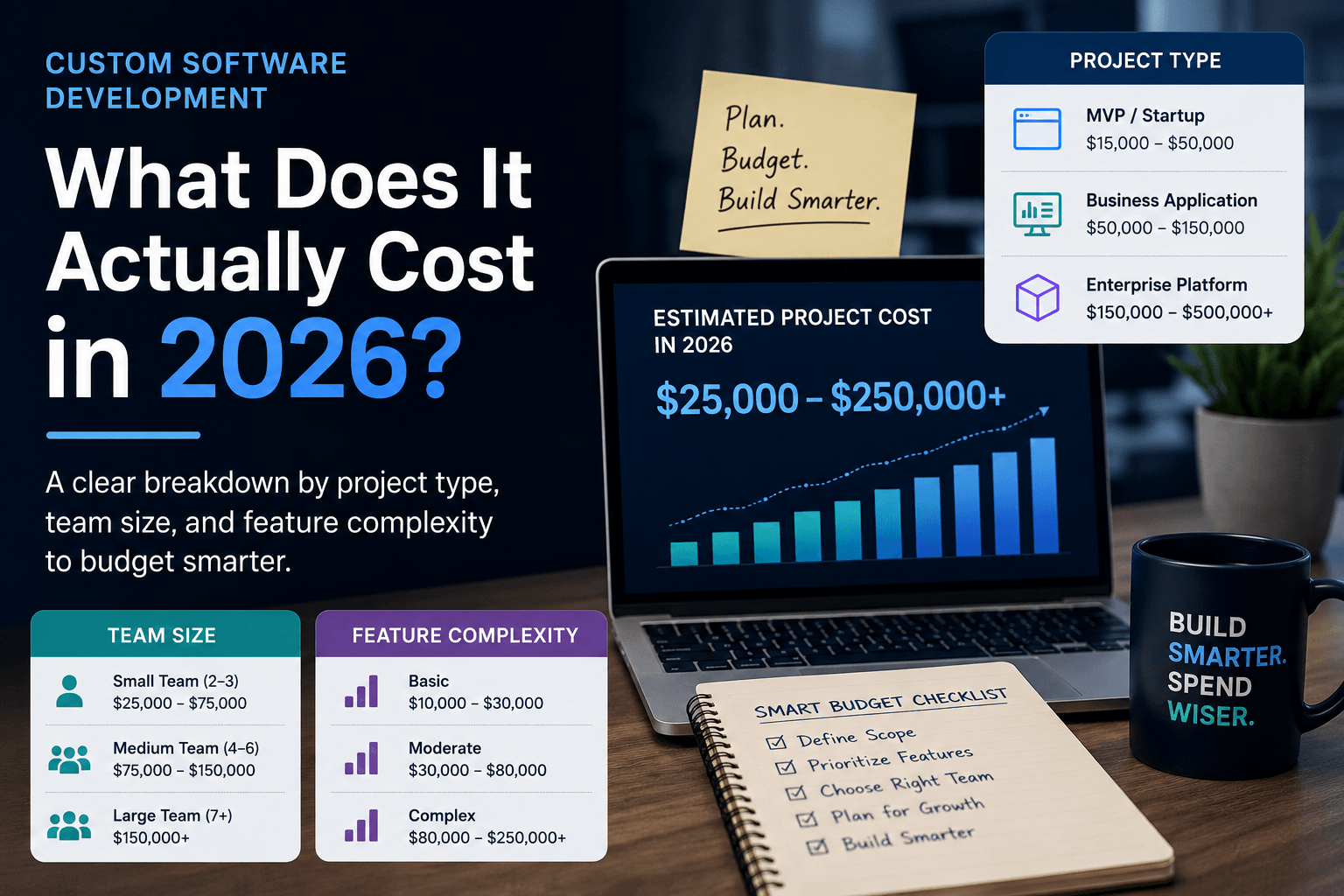
Many business owners hesitate to include a budget in their RFP, but doing so actually works in your favor. When vendors know your range, they can propose a solution that fits rather than over-engineering a feature set you cannot afford.
You do not need an exact number. Stating a range such as "$75,000 to $120,000" is enough to filter out mismatches on both ends and helps vendors propose phased delivery options if needed.
7. Vendor Qualifications
Outline what you expect from a qualified development partner. Common criteria include:
Minimum years of experience in custom software development
Relevant industry experience or case studies
Team structure (dedicated project manager, QA testers, UX designers)
Communication processes and tools
Post-launch support and maintenance offerings
Client references available upon request
8. Proposal Submission Instructions
Make it easy for vendors to respond correctly. Specify:
The submission deadline and format (PDF, email, online form)
Who to contact with questions
Whether you will be hosting discovery calls or demos before selection
How you will evaluate and score proposals
Free Software Development RFP Template
Below is a simple template you can copy and adapt for your project:
Section 1: Company Overview
Company name, industry, location, team size, existing tech stack.
Section 2: Project Summary
One to two paragraphs describing the software, its purpose, and its primary users.
Section 3: Goals and Success Metrics
Three to five measurable outcomes that define project success.
Section 4: Functional and Technical Requirements
Bulleted lists of must-have features and technical constraints.
Section 5: Timeline
RFP response deadline, desired start date, key milestones.
Section 6: Budget Range
Stated range with notes on phased delivery if applicable.
Section 7: Vendor Qualifications
Experience requirements, team expectations, and support needs.
Section 8: Submission Instructions
Deadline, format, contact person, and evaluation criteria.
Common RFP Mistakes to Avoid
Being too vague: Phrases like "user-friendly" or "scalable" mean nothing without context. Define what those terms mean for your project.
Skipping the budget: This invites proposals that are completely misaligned with your financial reality.
Focusing only on features: Describe the problem you are solving, not just a list of screens and buttons.
Ignoring post-launch needs: Ask vendors how they handle bugs, updates, and ongoing maintenance before you sign anything.
Evaluating on price alone: The cheapest proposal is rarely the best value in custom software development.
Next Steps: Get Expert Help Writing Your RFP
Writing a strong RFP takes time, but it is one of the best investments you can make before a custom software project. It aligns expectations, filters out the wrong vendors, and gives you a much cleaner path to a successful launch.
Use the fillable, print-ready template at nextgensoftware.us/rfp-template. Open it, fill in your project details, and save it as a PDF to send to vendors.
If you are based in South Florida or working with a remote team, NextGen Software in Boca Raton, FL specializes in guiding business owners and founders through exactly this process. From refining your project scope to evaluating vendor responses, the NextGen team helps you move forward with clarity and confidence.
Ready to get started? Schedule a free discovery call at nextgensoftware.us and bring your project idea. The team will help you shape it into a proposal-ready plan.